06: UNIVERSALITY
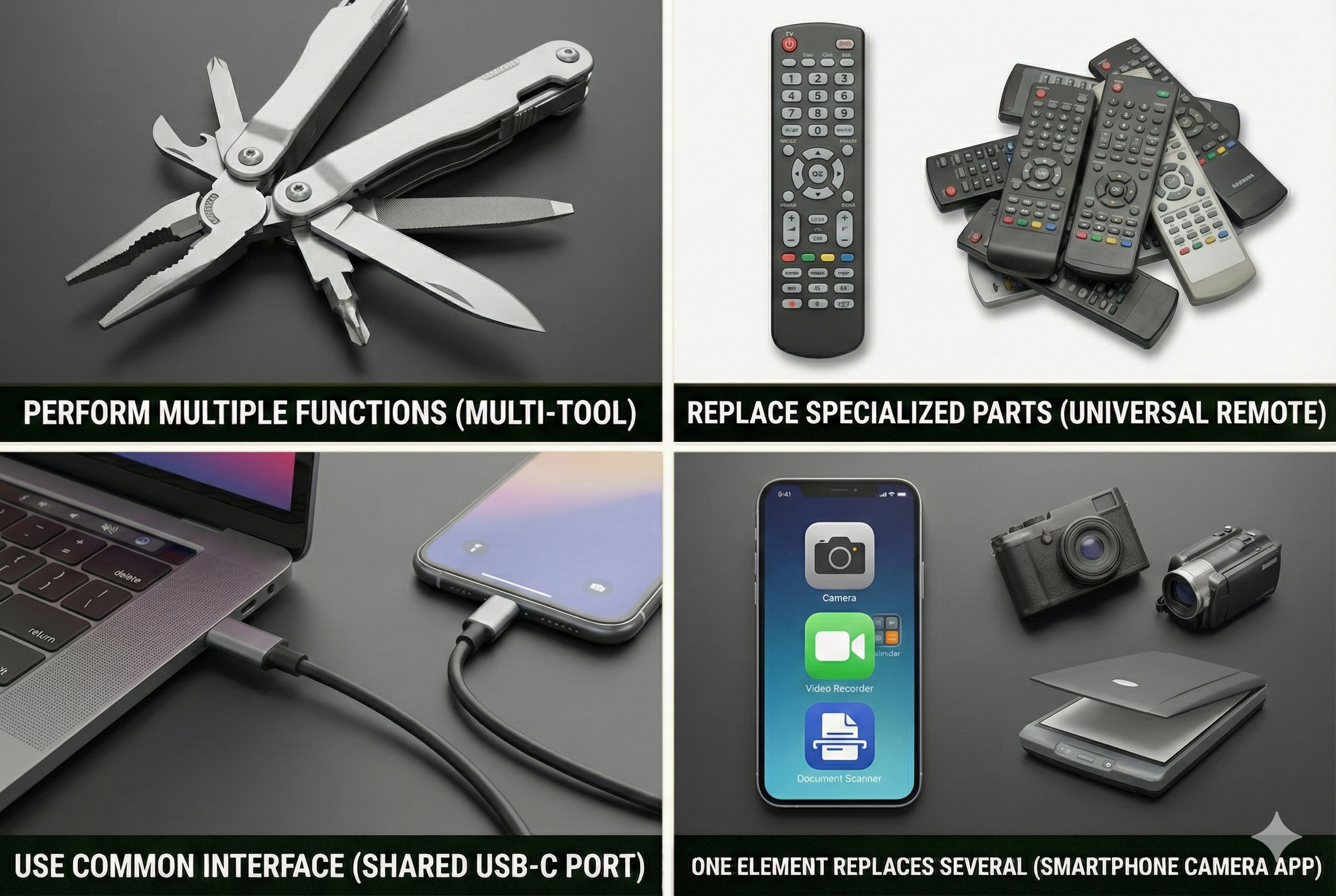
Universality is the practice of making a component, tool, or system perform multiple functions, so that a system can replace several specialized tools. Instead of designing a specific component for each task, you create a 'multi-purpose' element that reduces overall complexity, parts count, and management—while maintaining highest performance results.
This principle is expressed in three common moves:
•
Make an object or a system perform multiple functions; for e.g. a tool can do several jobs;
•
Replace multiple specialized parts with one universal part (standardize to reduce variety)
•
Use adjustable features or attachments that allow the system to meet varied needs (shared tool, or universal adapter)
Why "Universality" creates innovation?
When you design for universality, you unlock multiple advantages at once:
1.
Reduced complexity and parts count: fewer parts, fewer interfaces, and smaller bill of materials.
2.
Faster development and deployment: one versatility platform can serve many markets and applications.
3.
Simpler maintenance & repair: fewer unique spare parts and easier troubleshooting (universal components).
4.
More flexibility and scalability: the same element can perform many tasks or enable reconfiguration.
5.
Better value: multi-role components increase value per unit by serving many roles throughout the system.