25: SELF-SERVICE
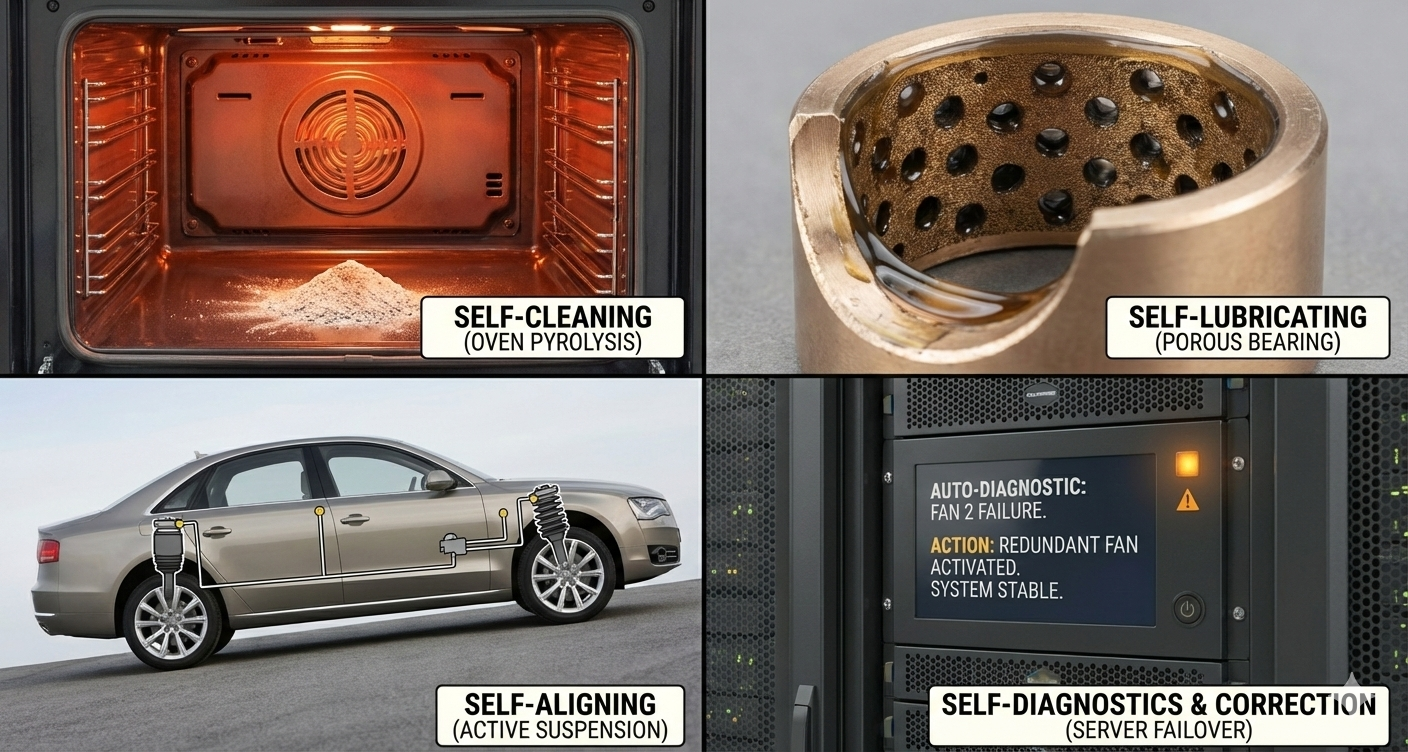
Self-Service is the practice of making a system perform its own auxiliary functions (delivery, cleanup, maintenance, protection) to remove products of external assistance, manual intervention, or extra equipment modules—instead of adding external components or labor for cleaning, cooling, adjusting, diagnosing, or repairing, the system uses its own 'leftover field' through automation, self-adjustment, self-maintenance, or self-recovery mechanisms.
This principle is expressed in three common moves:
Make an object serve itself by performing auxiliary, maintenance, both cleaning, self-lubricating, self-aligning, self-redeveloping;
Eliminate redundant elements that are for maintenance, protection, coolers, exhaust, etc. to perform useful auxiliary functions;
Use self-diagnostics and self-reclamation making the system find its own issues and solve some of the actions without external task;
Why "Self-Service" creates innovation?
When a system supports itself intentionally, you unlock multiple advantages at once: