01: SEGMENTATION
Segmentation is dividing a system, object, or process into smaller, independent parts so it becomes easier to design, optimize, maintain, upgrade, and scale. In TRIZ, it is one of the most frequently used strategies because it converts “one big hard problem” into several smaller solvable problems.
This principle is expressed in three common moves:
•
Divide an object into independent parts;
•
Make an object sectional so it's easy to assemble/disassemble
•
Increase the degree of fragmentation (make the structure more 'granular')
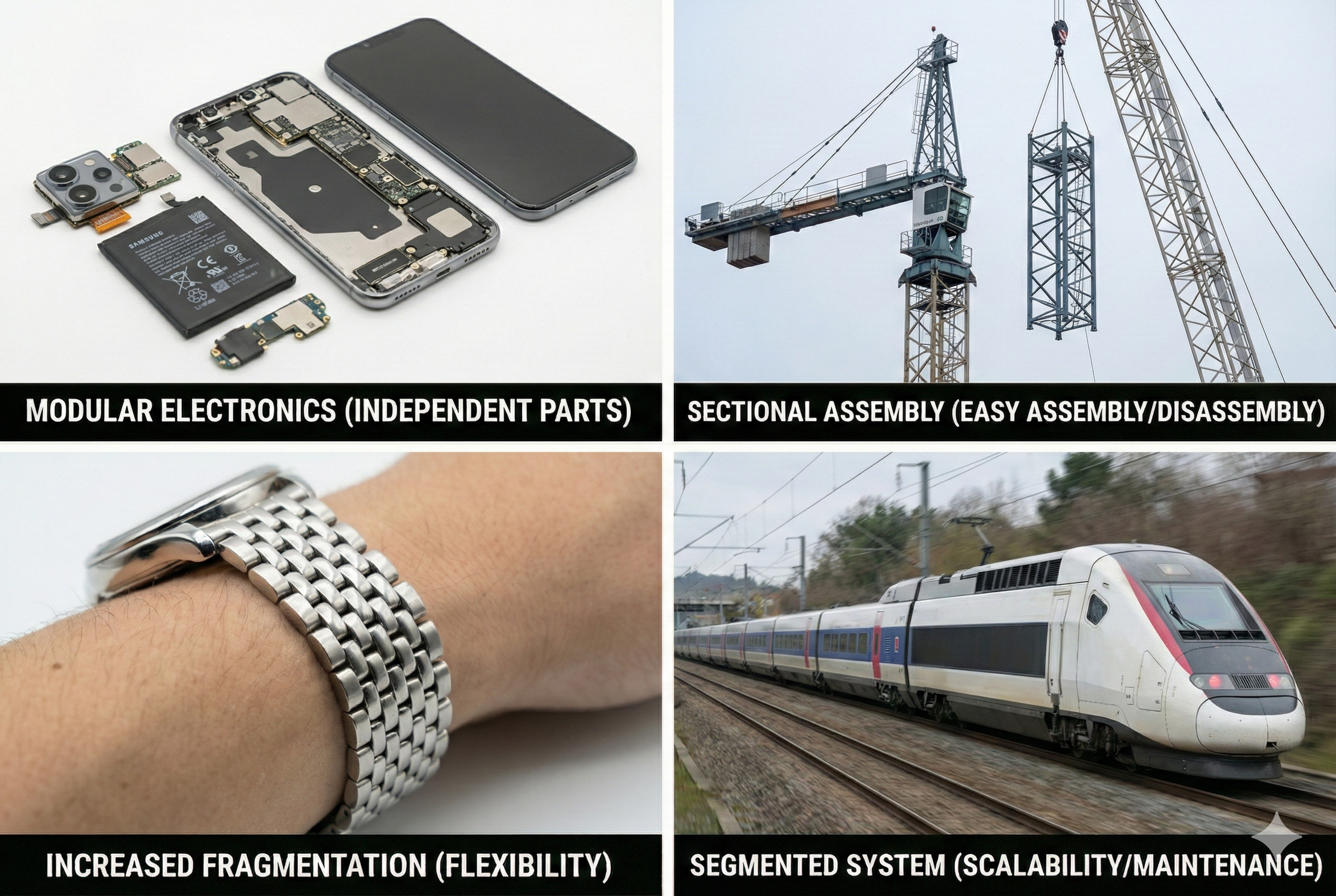
Why "Segmentation" creates innovation?
When you split a system into modules, you unlock multiple advantages at the same time:
1.
Easier improvement: you can upgrade one module without redesigning everything.
2.
Faster development: different teams can work in parallel on different modules (like a work breakdown structure).
3.
Simpler maintenance & repair: damaged parts can be replaced, not the whole system (design for serviceability).
4.
Customization: users can choose the configuration that fits their needs (modular products).
5.
Better performance control: each segment can be optimized for its own function and operating conditions.