31: POROUS MATERIALS
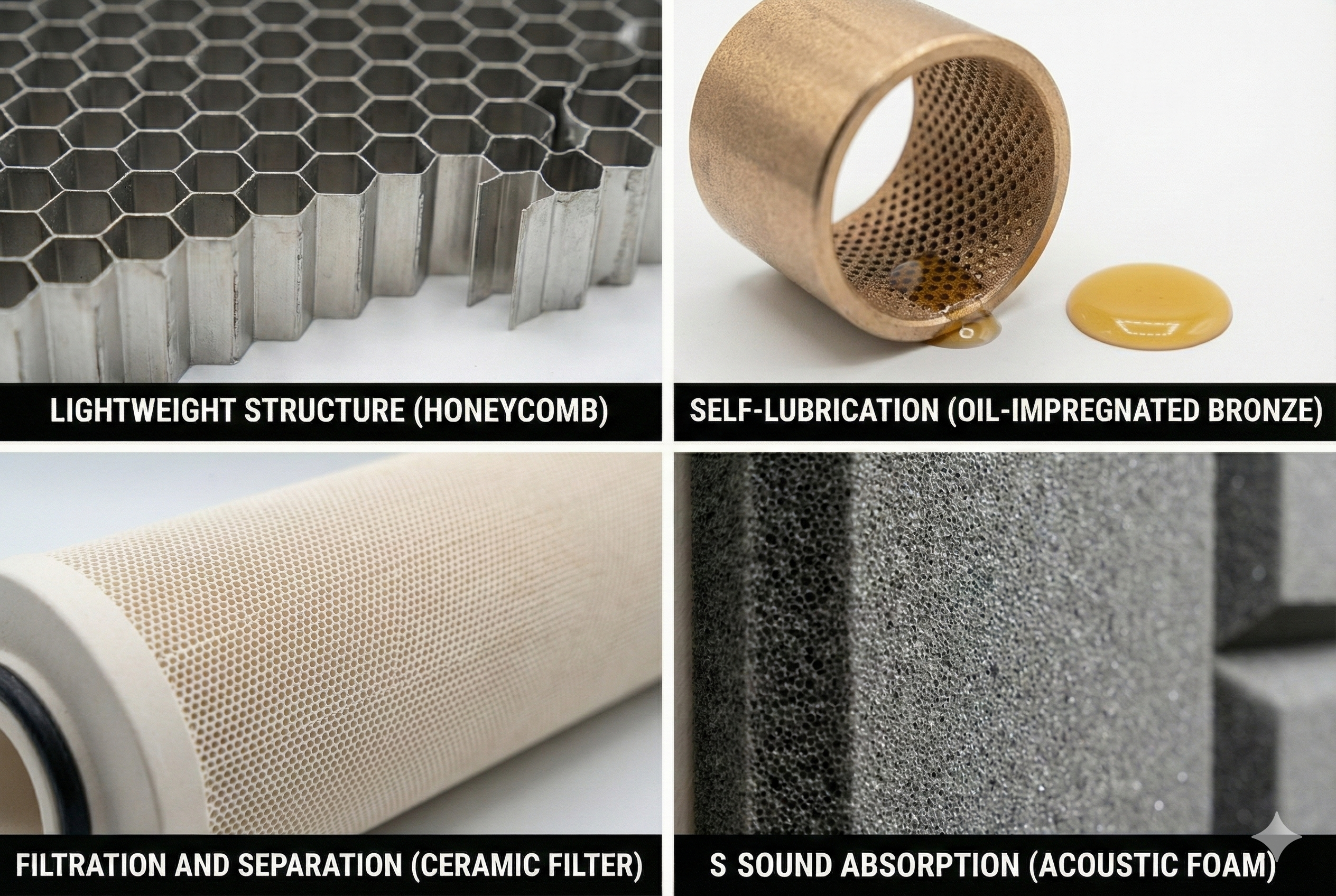
Porous Materials is the practice of introducing pores, voids, channels, or cellular structure into a material or component to gain specialized resources—like light weight, high strength, insulation, absorption, filtration, damping, or controlled permeability. Instead of using a fully solid "dense" body or portion, you make a porous liquid/metal/plastic, so the system can function with thermal and constant interaction with fields, heat, sound, or particles.
This principle is expressed in three common moves:
Make an object porous (foam, honeycomb, lattice, sintered, fiber, low-micro structures) rather than solid;
If an object is already porous, fill the pores with a useful substance (lubricant, coolant, catalyst, storage material, mesh filter, sensors);
Use porosity for functional utility: filters, heat exchangers, transport, filtration, thermal management, acoustic dampings;
Why "Porous Materials" create innovation?
When you design porosity deliberately, you unlock multiple advantages at once: