29: PNEUMATICS AND HYDRAULICS
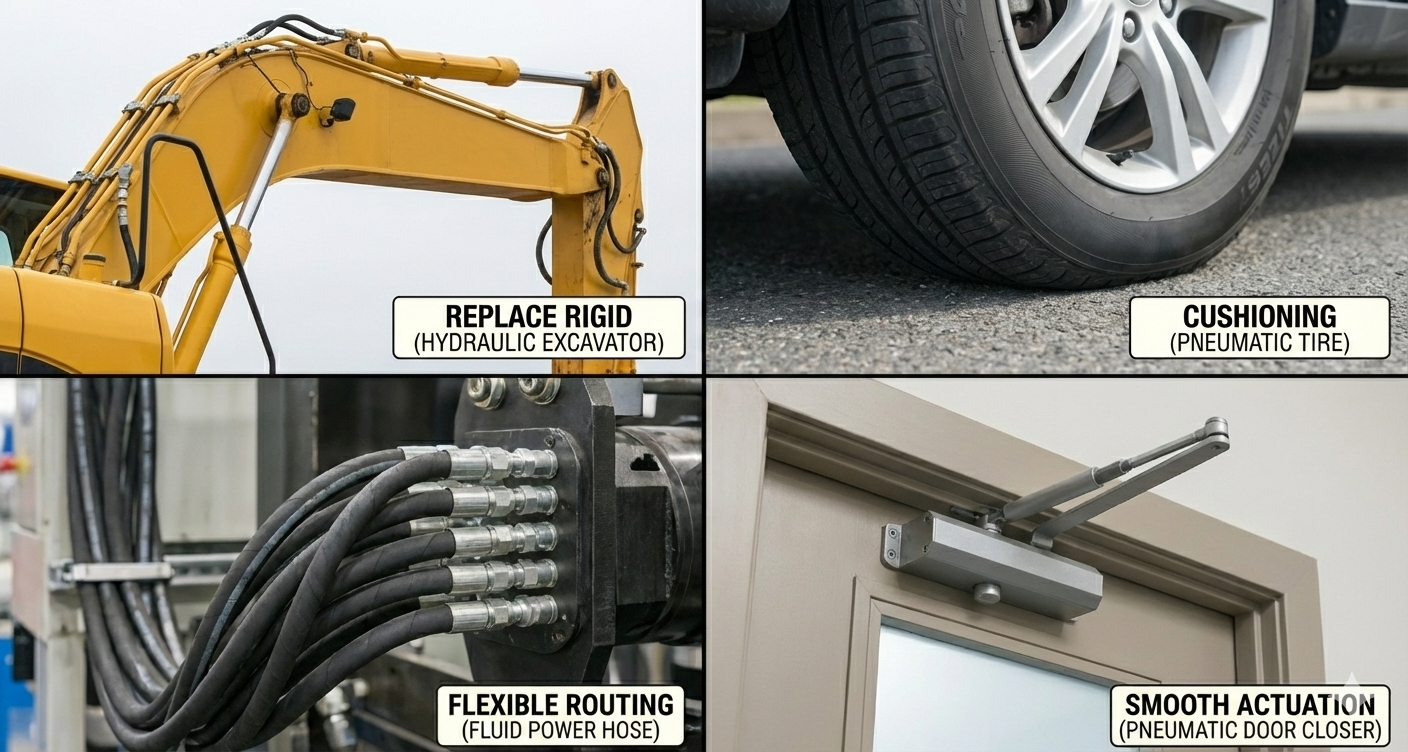
Pneumatics and Hydraulics is the practice of replacing rigid mechanical elements (solid parts, forces, linkages) with gaseous (pneumatic) or liquid (hydraulic) systems to achieve smoother, more powerful, or flexible actuation—instead of relying on purely solid mechanics, you use air or fluid pressure to create smooth movement, actuation, shock absorption, fine heat sensing, and controllable power—often enabling compact, flexible, and tough designs.
This principle is expressed in three common moves:
Replace solid mechanical system parts with flexible gas (pneumatic) or liquid (hydraulic) components;
Use fluid pressure to transmit force and motion through flexible tubes, hoses, channels, internal or external instead of rigid linkages;
Use fluid parts for cushioning, damping, cooling, or resistance adjustment to reduce impact, vibration, and wear;
Why "Pneumatics and Hydraulics" create innovation?
When you shift to fluid power deliberately, you unlock multiple advantages at once: