36: PHASE TRANSITION
Phase Transition is the practice of using physical phenomena that occur during substance change stages (solid to liquid, liquid to gas, etc.) and deliberate the 'internal power' of transitions to create specific effects. Instead of fighting heat, pressure, or material limits with more power, in the system you use the latent heat, sudden property changes, or rapid density changes that naturally happen at the performance point.
This principle is expressed in three common moves:
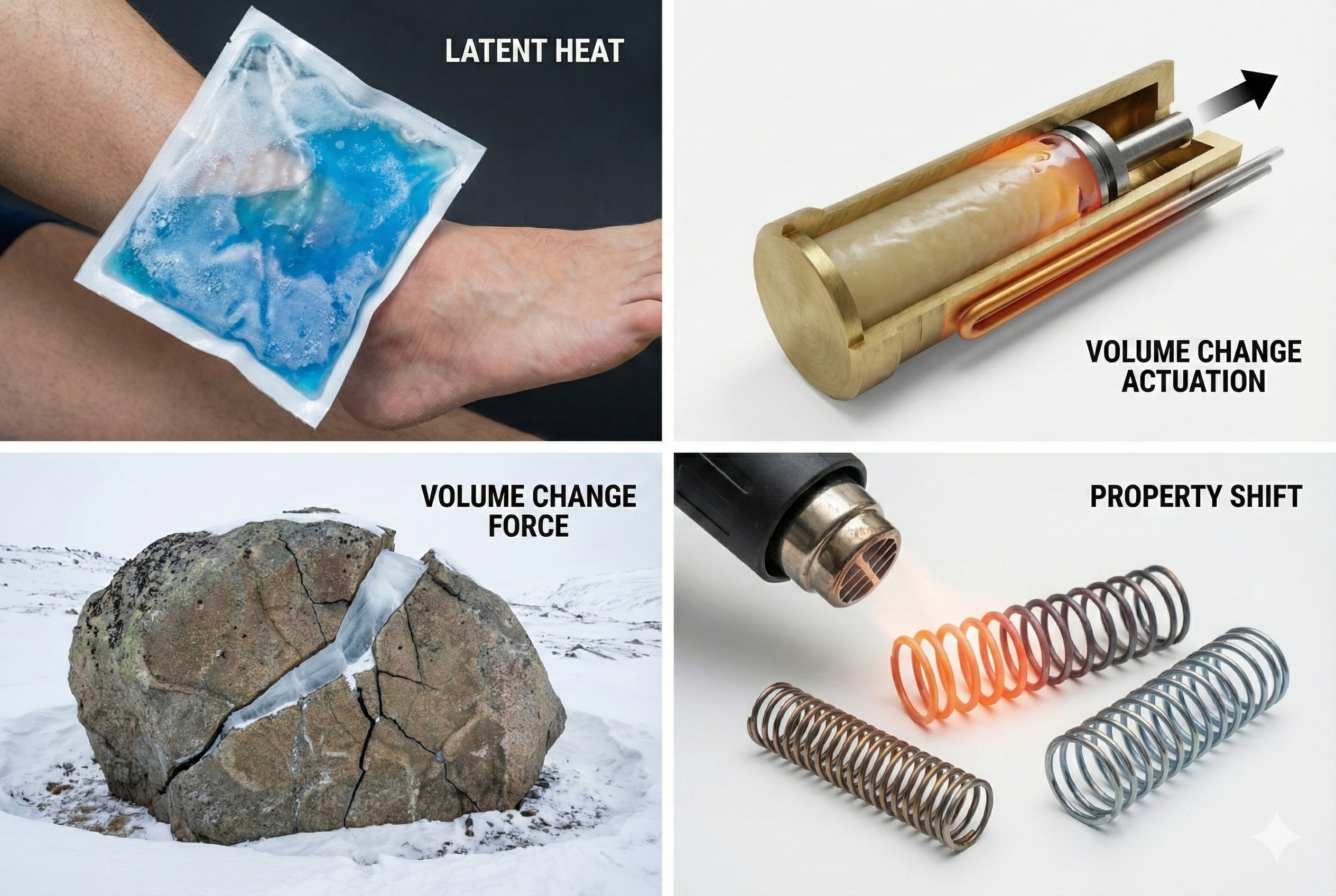
Use phenomena inherent during cooling/high-phase transitions (volume expansion or release for heat transfer/energy exchange);
Use phenomena of density change during phase change to generate force, separation, sensing, orientation (e.g., expansion on freezing or loss of mass when evaporated);
Exploit latent energy/latent heat (e.g., large changes in stiffness, electrical conductivity, or heat capacity) in the final behavior to 'switch' performance modes;
Why "Phase Transition" creates innovation?
When you design around phase-change effects, you unlock multiple advantages at once: