35: PARAMETER CHANGE
Parameter Change is the practice of changing physical or chemical parameters—instead of redesigning the whole structure—instead of forcing performance through design, you shift physical state, density, temperature, viscosity, or electrical conductivity, you deliberately adjust these properties and constraints so that a better solution becomes apparent, reduce bottleneck, or hit a performance peak.
This principle is expressed in three common moves:
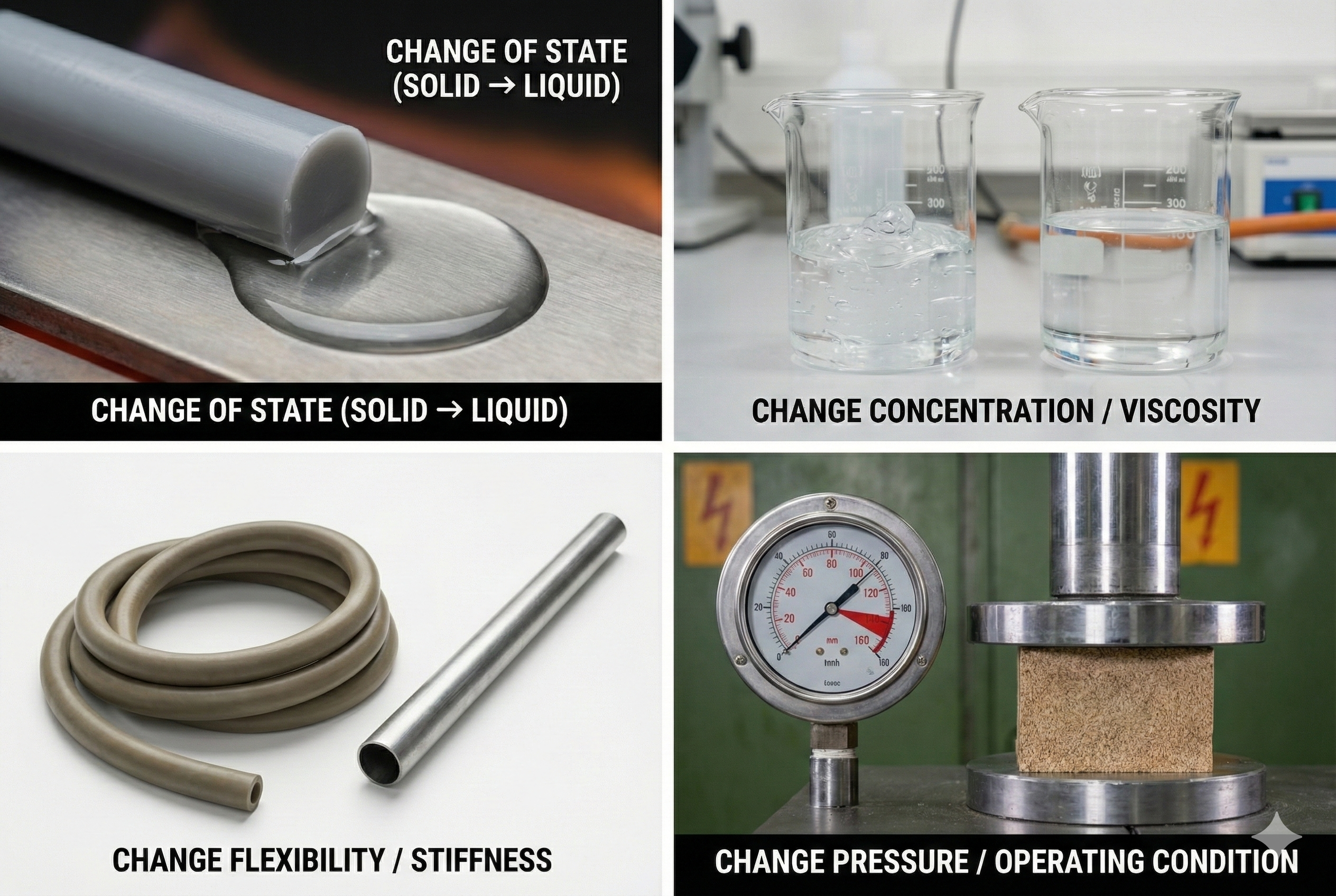
Change the physical state of the system (solid, liquid, or gas) to make the function easier or move efficient;
Change the parameter of density (concentration/consistency) to improve flow, packing, sensing, or stability;
Change parameters of flexibility or degrees of freedom (e.g., stiffness/elasticity/temperature, volume, pressure) to match what the system needs at each stage;
Why "Parameter Change" creates innovation?
When you change the right parameter intentionally, you unlock multiple advantages at once: