05: MERGING
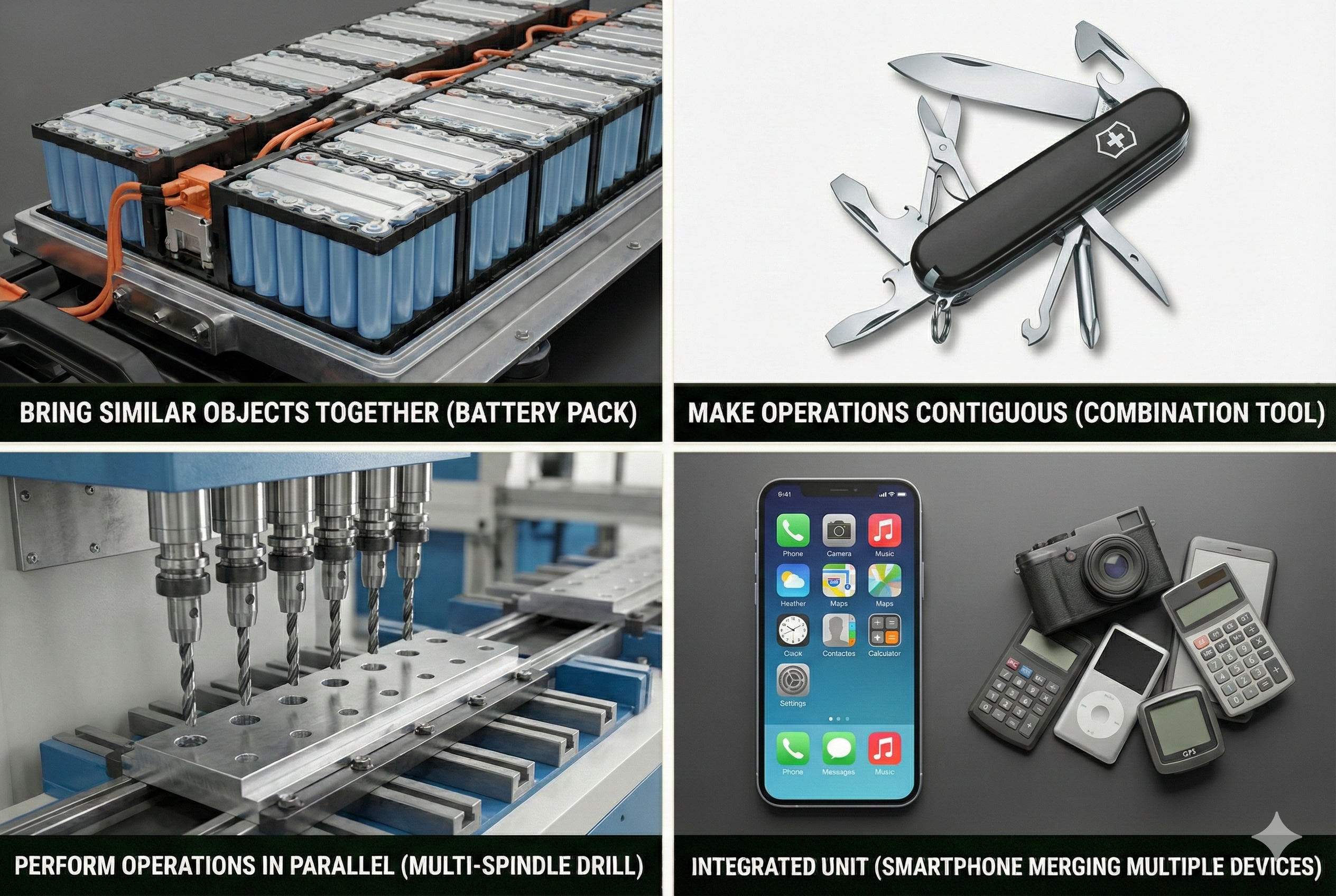
Merging is the process of bringing related functions, components, or operations together so they work as a single coordinated unit. Instead of having separate elements that must interact frequently, you fold them into one, so you reduce or eliminate redundant interfaces, delays, and friction.
This principle is expressed in three common moves:
•
Bring identical or similar objects together (combine similar functions, system modules, group elements)
•
Make objects contiguous or components contiguous (place side-by-side) so their integrated interfaces do not have to travel
•
Perform operations in parallel (solve separate needs at the same time) or sequentially within one process
Why "Merging" creates innovation?
When you merge elements deliberately, you unlock multiple advantages at once:
1.
Higher productivity: parallel actions and reduced transfer steps cut down lead time and increase throughput.
2.
Lower cost and waste: fewer parts means lower assembly costs, fewer housings/materials, and less storage space.
3.
Simpler control and coordination: one management/control system instead of synchronizing many separate units with complex interfaces.
4.
Lower footprint and weight: shared housings, shared supports, shared drives, and fewer connectors save space and mass.
5.
Better reliability: fewer connectors, joints, and interfaces means fewer failure points and more stable performance.