18: MECHANICAL VIBRATION
Mechanical Vibration is the practice of having an object oscillate or vibrate to remove friction, overcome resistance, or enable effects that are impossible with a steady, static action—instead of pushing harder, you introduce a small, fast back-and-forth (vibrating) movement to improve transport, impact, or separation/processing, or create resonance effects.
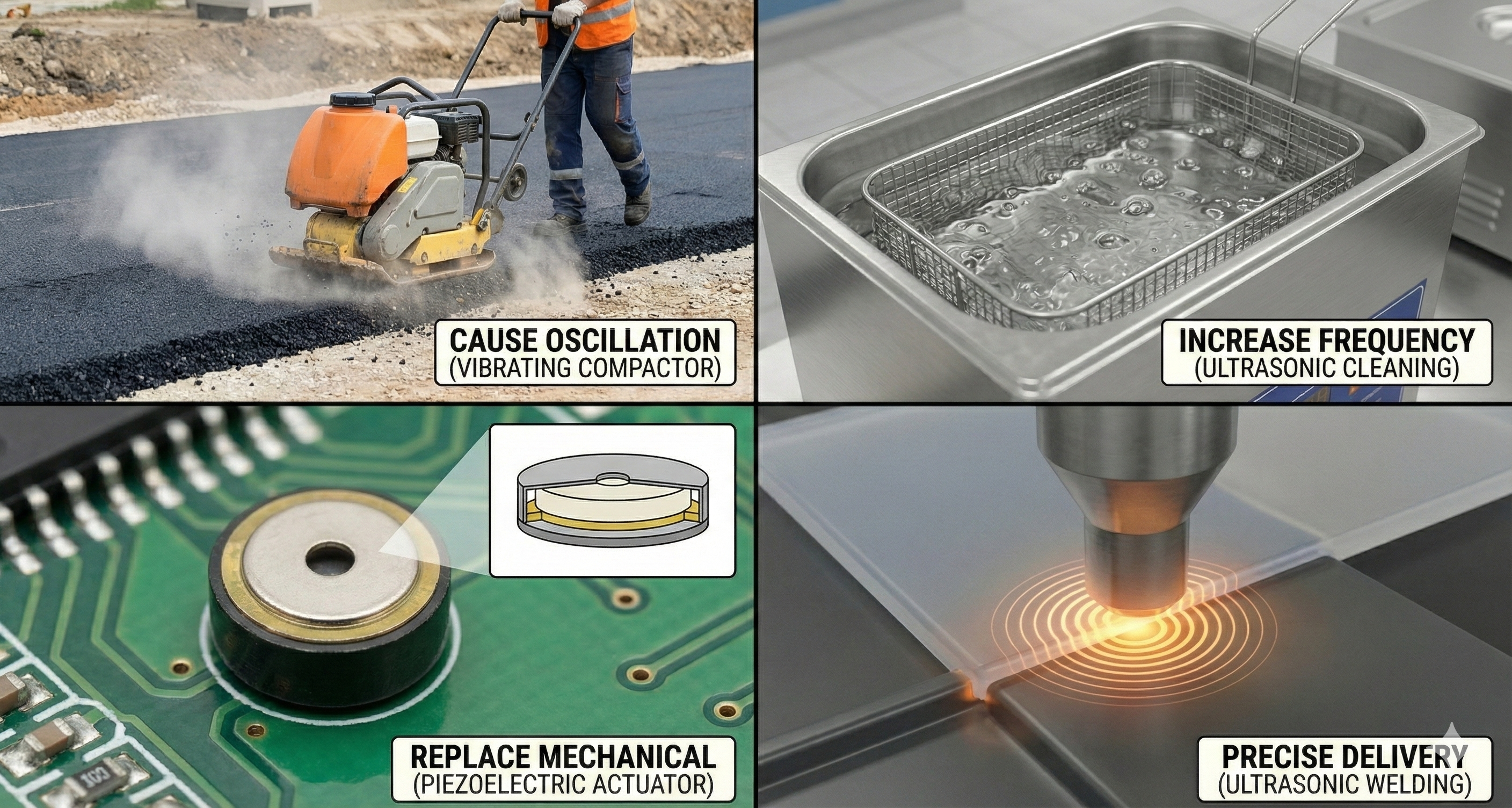
This principle is expressed in three common moves:
Cause an object to oscillate or vibrate to overcome resistance without adding excessive force (e.g., vibrating conveyors, loosening);
Increase frequency (e.g., to ultrasound) and/or use resonance to simplify/speed up tasks;
Replace mechanical vibration with piezoelectric oscillators to reach high frequencies and/or use small back-and-forth movements with vibration for easier handling, compact, or precise vibration;
Why "Mechanical Vibration" creates innovation?
When you introduce vibration strategically, you unlock multiple advantages at once: