39: INERT ENVIRONMENT
Inert Environment is the practice of changing the surrounding environment to prevent reacting and interfering with an interaction (oxidation/reaction) and keep efficient prevention instead of high-speed oxidation, corrosion, combustion, contamination, or chemical incompatibility with external protection—you remove the 'oxidizing' gases (prevent gas, inert liquid, vacuum, or an insulating medium)—so the useful function works longer, faster, or easier.
This principle is expressed in three common moves:
Replace a normal environment that causes interference (e.g., with gas, moisture, oxygen) with a neutral/inert atmosphere;
Add an inert additive or filler to the environment that is always neutral to support chemical interaction or reduce risk/reaction;
Isolate the 'part' or work in a neutral environment by shielding or protective layer (vacuum environment, double chamber glove box, inert-gas encapsulation);
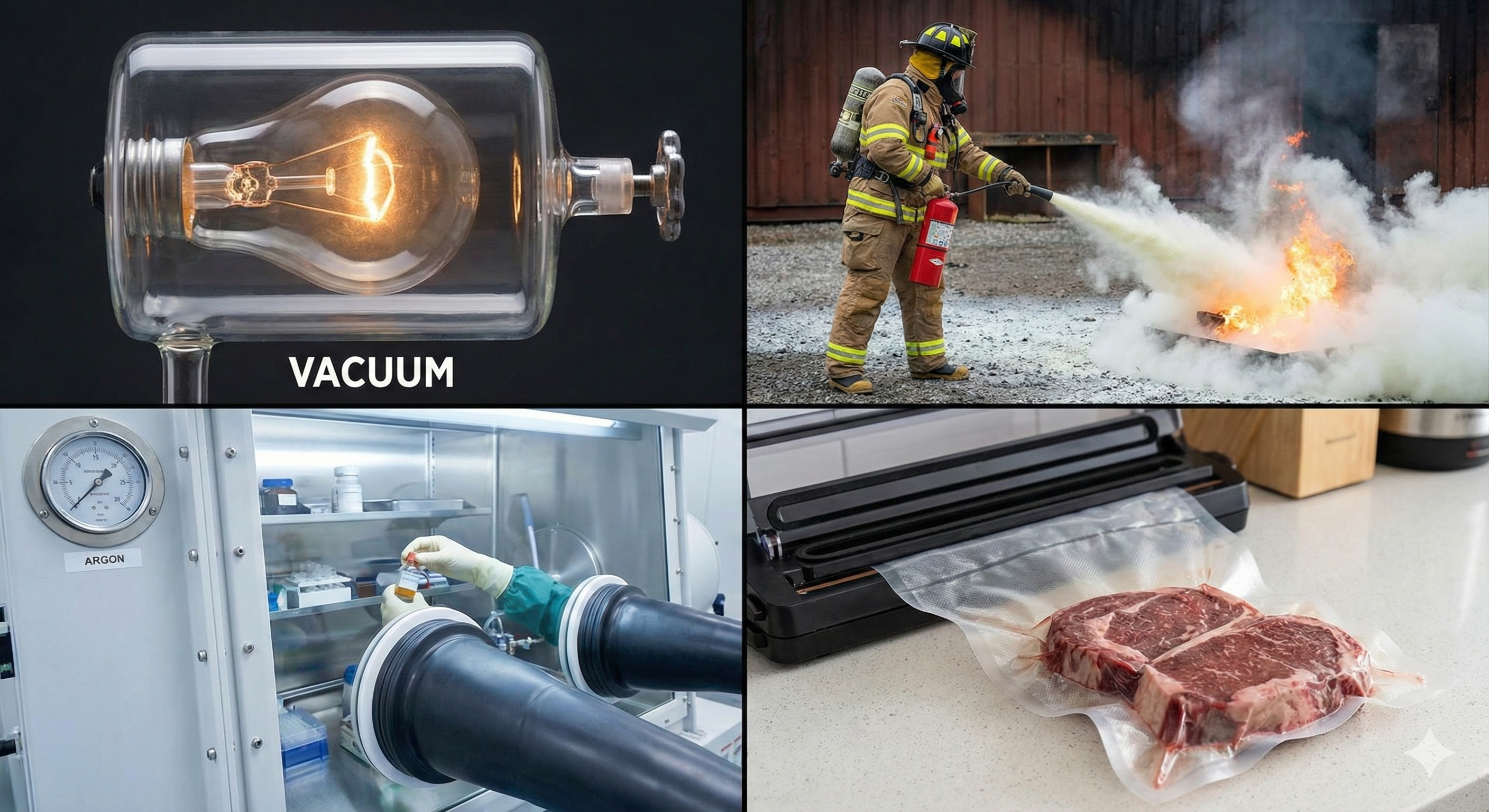
Why "Inert Environment" creates innovation?
When you match the environment and non-reactivity on purpose, you unlock multiple advantages at once: