33: HOMOGENEITY
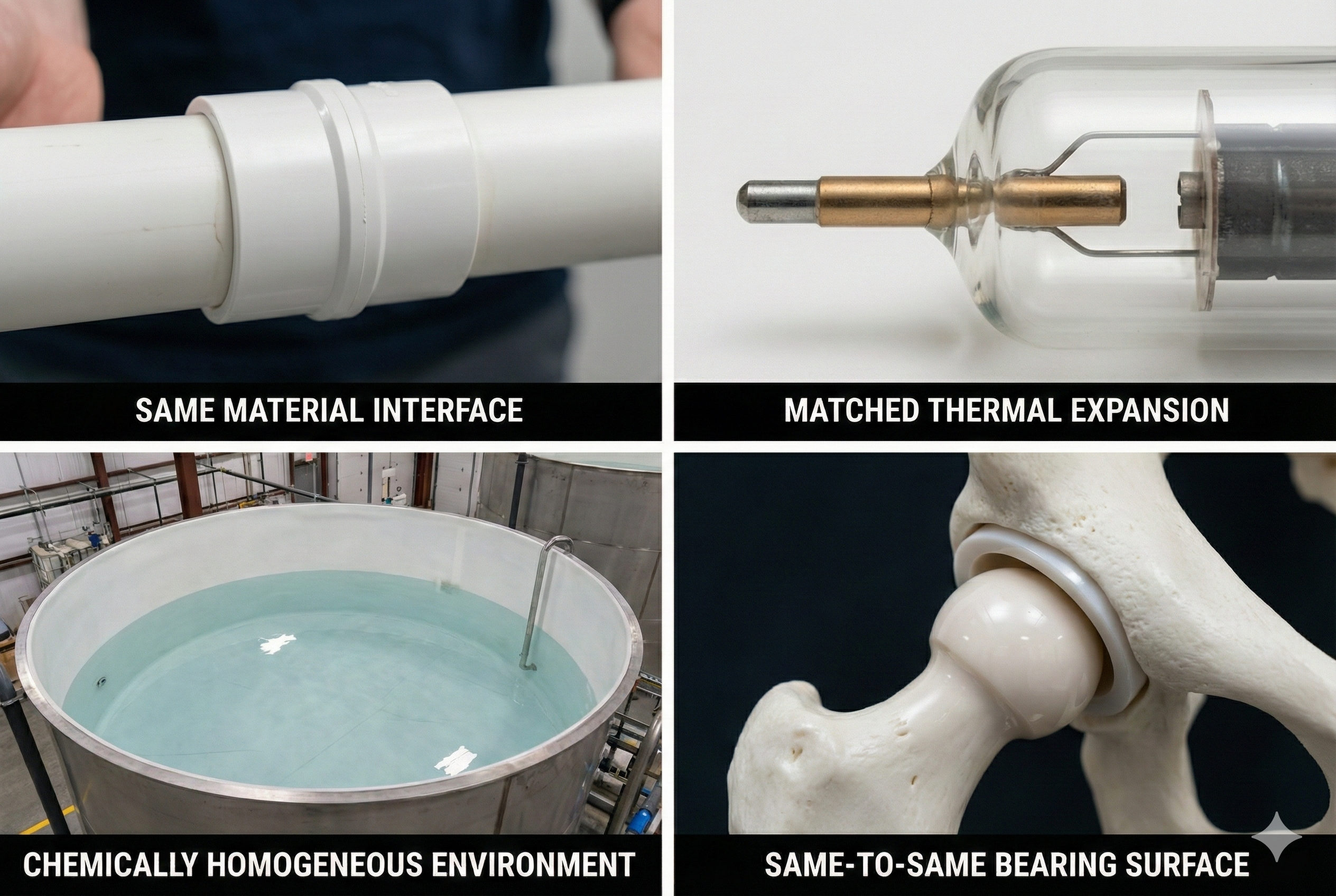
Homogeneity is the practice of making the interacting parts of a system the same (from the same material, properties, and behavior) so that interaction becomes predictable and constant. Instead of having incompatible materials interface that cause friction, corrosion, contamination, thermal expansion, or weak points, you align the nature of the parts so they cooperate naturally.
This principle is expressed in three common moves:
Make objects that interact with each other from the same material (or material with identical material properties);
Make an object interact with a homogeneous environment (or an environment close to the intended 'same nature');
Monolithize: move issues of building/joint weak or varied by process or states that are difficult to construct;
Why "Homogeneity" creates innovation?
When you make interacting elements similar on purpose, you unlock multiple advantages at once: