23: FEEDBACK
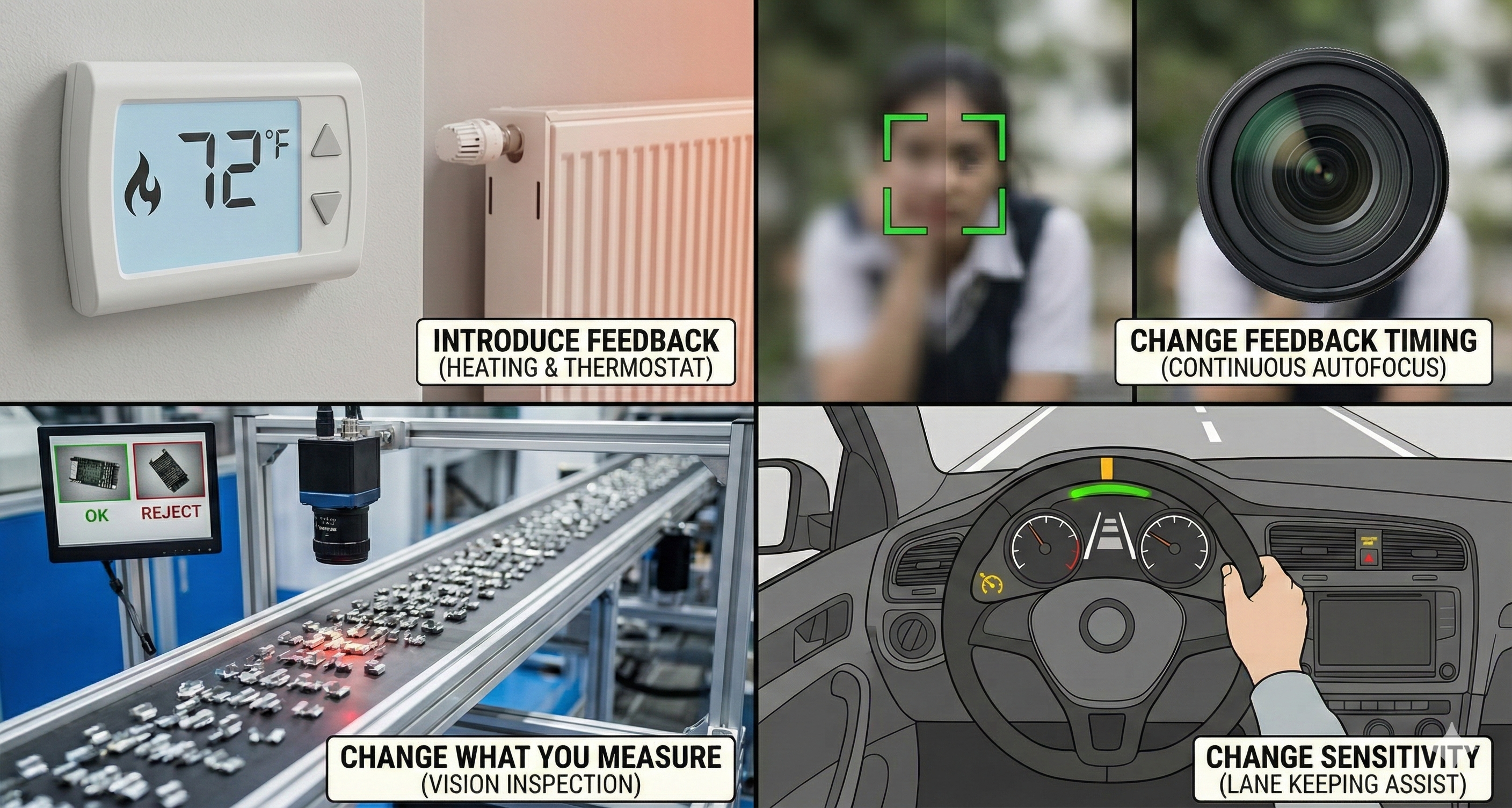
Feedback is the practice of measuring the result of an action and feeding that information back into the system to correct, stabilize, and improve performance. Instead of 'set-and-hope,' the system learns from output and adjusts the input (manually or automatically), so quality stays on target even when conditions change.
This principle is expressed in three common moves:
•
Introduce feedback to improve a process or action (monitor → compare → adjust);
•
If feedback already exists, change it—its magnitude, sensitivity, influence, timing, or what you measure—to get a better outcome;
Why "Feedback" creates innovation?
When you build feedback into a system, you unlock multiple advantages at once:
1.
Higher accuracy and consistency: the system self-corrects drift, variation, and disturbances instead of accumulating errors.
2.
Better robustness to variability: changes in material, environment, or use-case are handled through correction rather than over-design.
3.
Faster improvement cycles: measurement → adjustment turns operation into continuous learning (e.g., process tuning and quality control).
4.
Lower waste and rework: earlier detection and correction reduces scrap, defects, and downstream fixes.
5.
Smarter control where it matters: you can change what the feedback 'means' (KPIs, setpoints, sensitivity) to steer the system toward the real objective, not just the easy-to-measure one.