34: DISCARDING AND RECOVERING
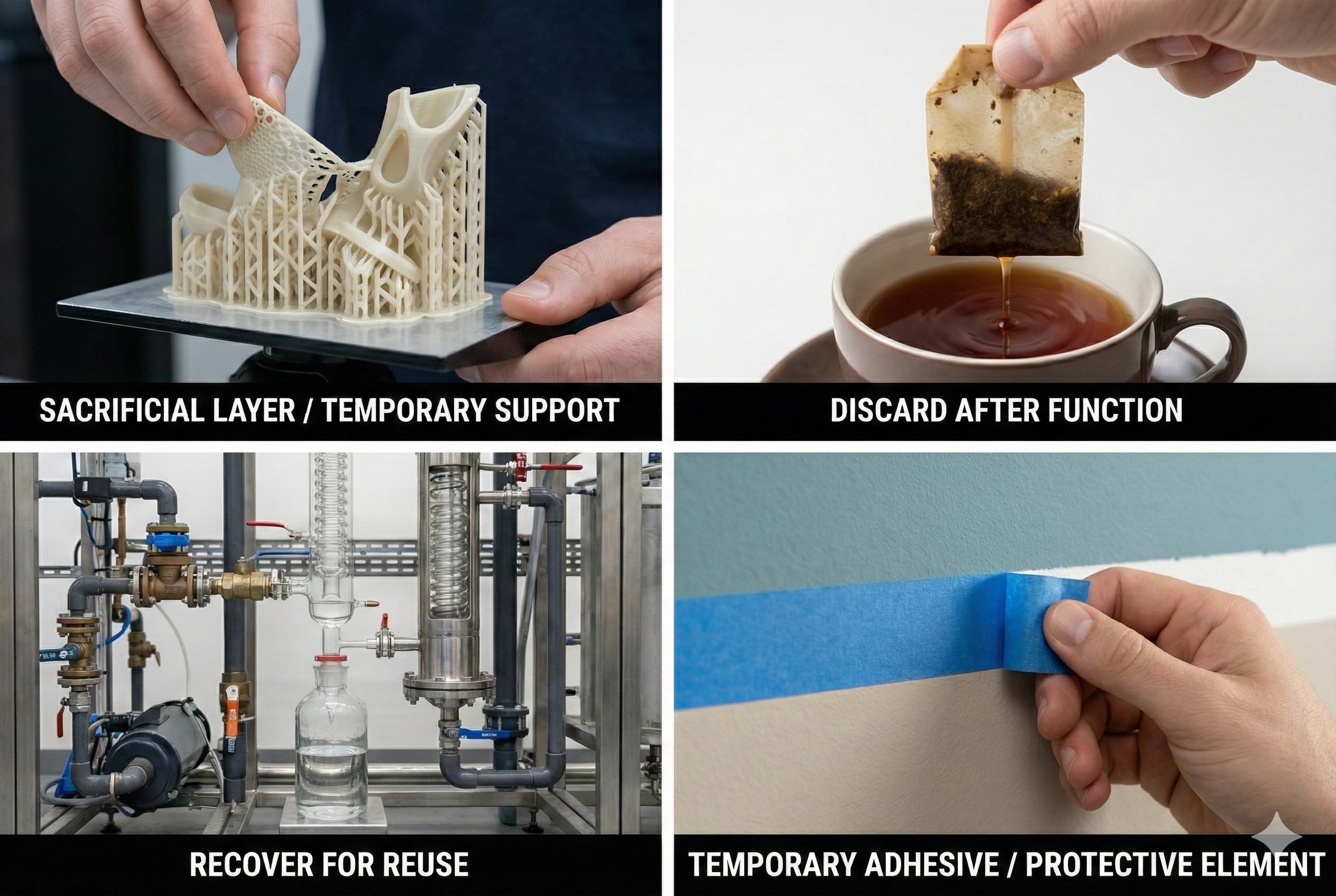
Discarding and Recovering is the practice of discarding or abandoning parts of a system that have fulfilled their function, or restoring/replacing used-up elements directly during operation to ensure continuous function—instead of holding on to dead weight, obsolete modules, or used-up components, you design for 'on-the-fly' discard or recovery so the system remains efficient and agile.
This principle is expressed in three common moves:
After a part has fulfilled its function, discard it (evaporate, dissolve, etc.) or abandon/remove it from the system to allow for the purpose intended to start;
If a system part is valuable, recover it (collect, separate, recycle, regenerate) so it can be reused;
Use sacrificial parts for valuable elements that enable then efficient function without any economic loss of expensive temporary supports, templates, or drivers;
Why "Discarding and Recovering" create innovation?
When you manage component lifecycles dynamically, you unlock multiple advantages at once: