20: CONTINUITY OF USEFUL ACTION
Continuity of Useful Action is the practice of keeping a system's useful functions working continuously—eliminating idle, nonproductive, or waste steps/intervals in a process—instead of having part of the system wait while other parts work, you redesign the sequence, layout, or flow so that useful work is always happening—it is the 'anti-bottlenecking' stage of making continuous operations or maintaining constant user engagement.
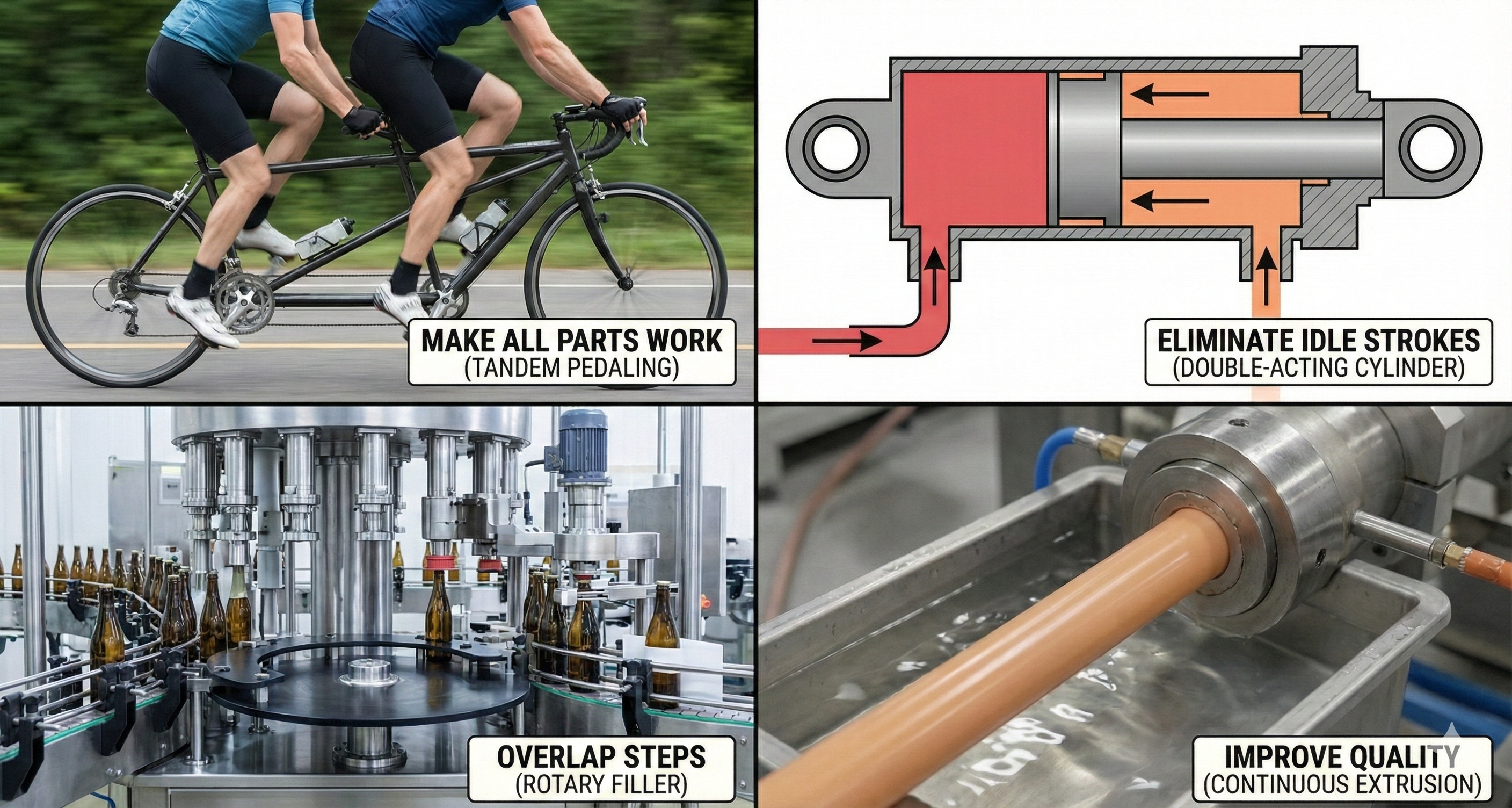
This principle is expressed in three common moves:
Make all parts of a system work at full load or at least do something useful during and between cycles;
Eliminate idle strokes (dead time), non-value-added phases, and delays;
Carry out work simultaneously; overlapping or parallelizing steps so that work starts while another is still active;
Why "Continuity of Useful Action" creates innovation?
When you remove interruptions and keep useful work continuous, you unlock multiple advantages at once: