32: COLOUR CHANGE
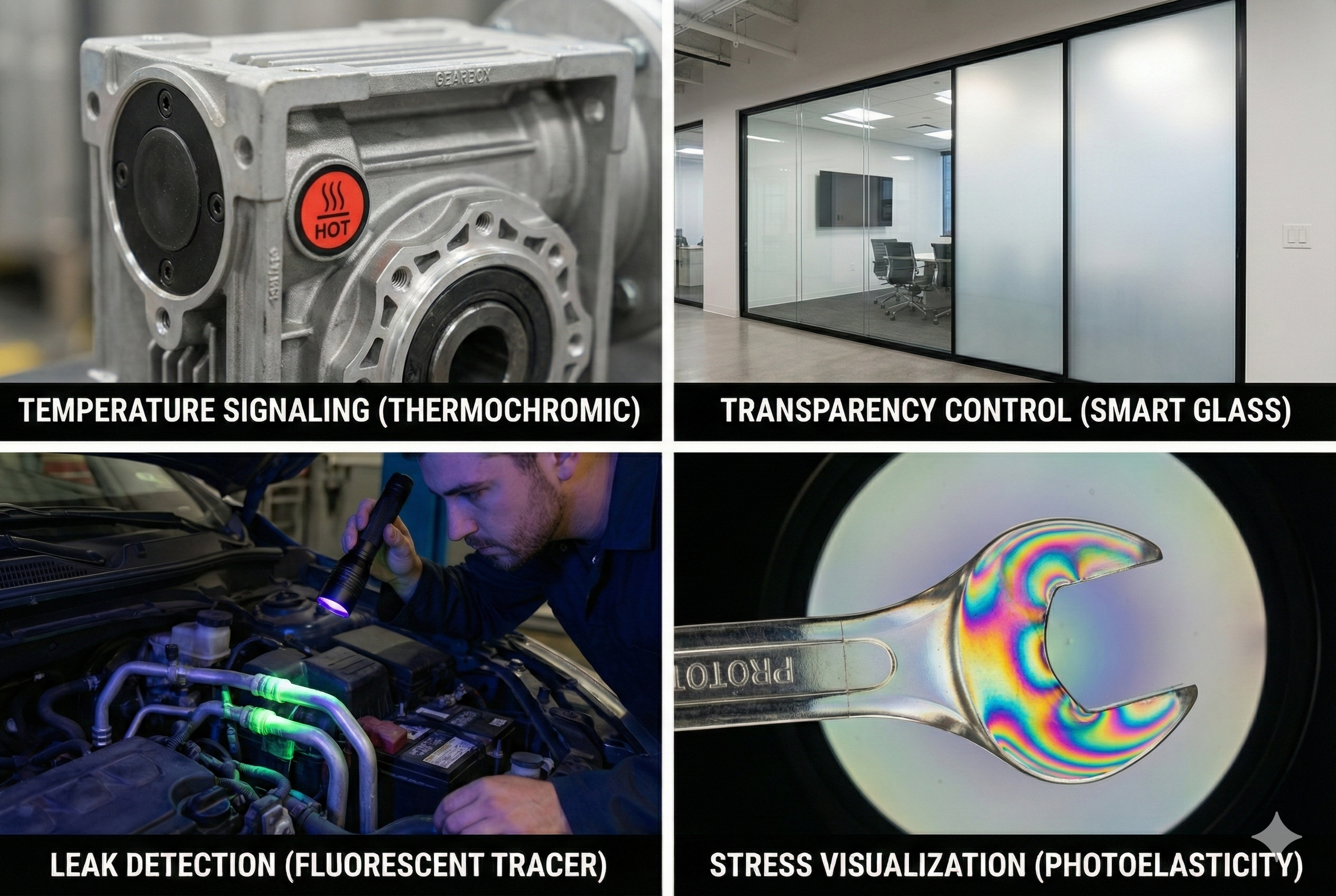
Colour Change is the practice of changing the color or optical properties of a system or its environment to make a condition easier to detect, detect an advantage, interact, or reveal/hide signals (temperature, stress, contamination, position, flow). You modulate the response to visible (measurements change, color), ultraviolet, transparency, or luminescence—revealing how a system behaves 'at a glance' and more reliably.
This principle is expressed in three common moves:
Change the color of an object or its external environment to improve visibility, signaling, or performance;
Change the degree of transparency of an object or its environment (make it clear vs. opaque vs. through-environment);
Use colour additives or filters including luminescent indicators to observe processes or states that are difficult to see directly;
Why "Colour Change" creates innovation?
When you 'encode information' into color or transparency, you unlock multiple advantages at once: