17: ANOTHER DIMENSION (TRANSITION INTO A NEW DIMENSION)
Another Dimension (Transition into a New Dimension) is the practice of moving an object from a 'flat-line' (1D or 2D) space to adding extra degrees of freedom to remove bottlenecks, reduce congestion, and allow new arrangements—instead of having everything in one way, bring the 'vertical' (3rd) axis depth, layers, or internal volume to increase functionality without expanding the system's outer footprint.
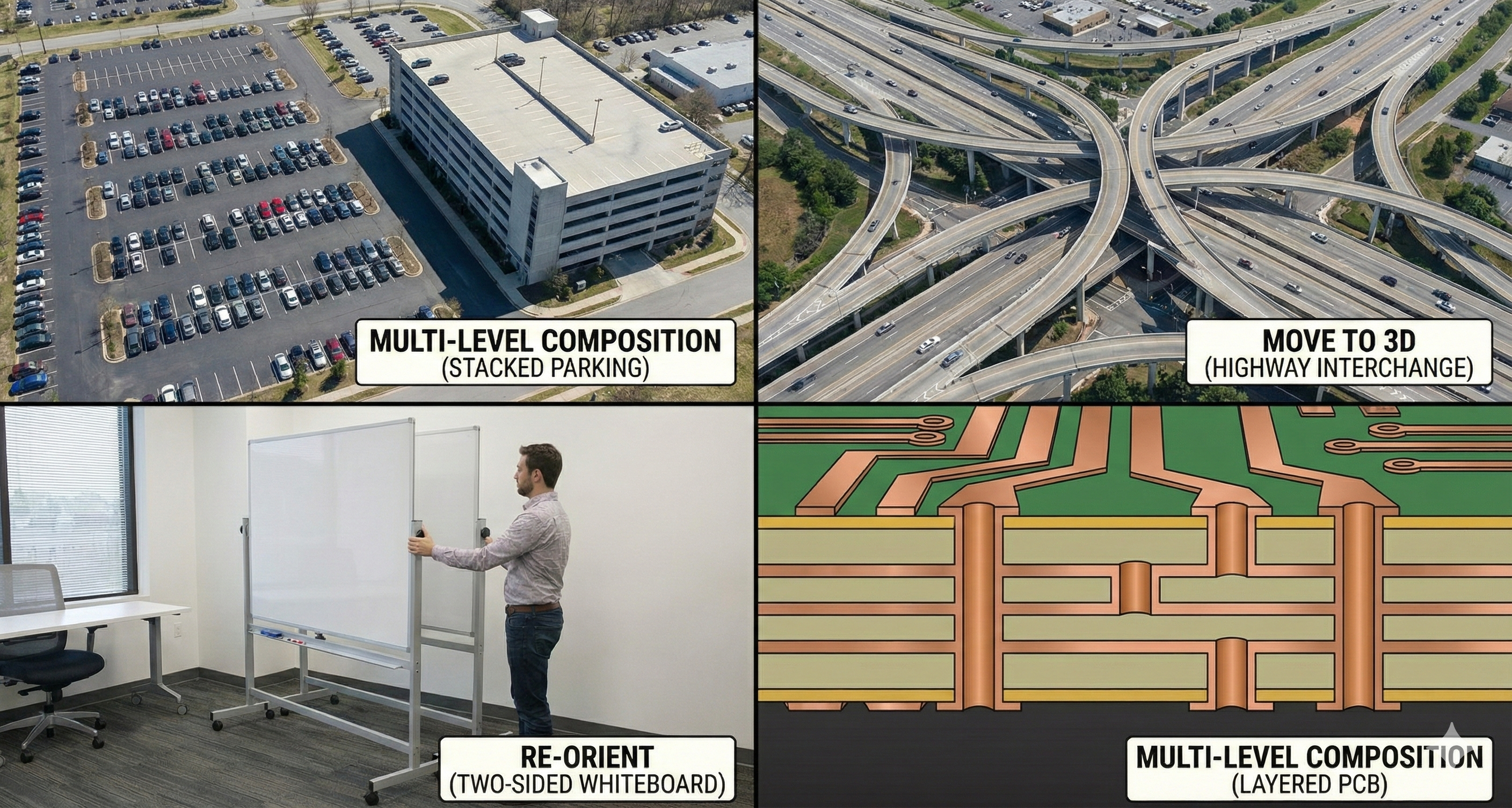
This principle is expressed in three common moves:
Move into extra axis (dimension shift: move from 1D -> 2D, 2D -> 3D; flat layout -> multi-level, stack, or spiral arrangement);
Use multi-level composition (stack, layer, or nesting/multi-level arrangements) to increase capacity without increasing footprint;
Re-orient an object or use 'the other side': tilt an object, place it on its side, or use the inner layers as additional space to relocate functions and free up space;
Why "Another Dimension" creates innovation?
When you add a new dimension deliberately, you unlock multiple advantages at once: